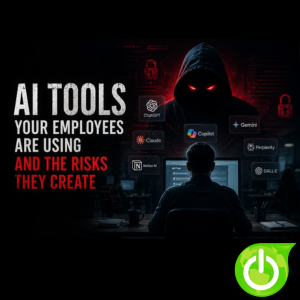
 The rapid rise of Artificial Intelligence (AI) at work has created a big twist: while bosses are still deciding whether to buy official AI software, employees have already gone ahead and used it anyway. Workers love these tools because they make everyday tasks much faster. However, this secret use creates huge risks that companies cannot afford to ignore.
The most common tools being used right now focus on writing, coding, and design. Employees routinely paste company information into chatbots to draft emails, summarize long reports, or polish marketing ideas. Programmers use AI assistants to fix broken code, and creative teams use image generators to make quick design mockups. Because these tools are free and easy to find online, employees download them without asking the IT department first. This is called “Shadow AI.”
This creates two major problems:
- Data Leaks: When an employee pastes sensitive info like private company numbers or customer details into a free AI tool, that data is often stored and used to train the model. This means private company secrets could accidentally be leaked to the public.
- False Information: AI tools are famous for making things up. They confidently state “facts” that are completely false or write code that doesn’t work. If an employee doesn’t double-check the AI’s work, it can lead to embarrassing mistakes and bad business decisions.
Shadow AI is quickly becoming the next major cybersecurity and compliance challenge for businesses of all sizes. Employees are turning to AI tools to work smarter and faster, but without proper controls, that productivity can come at the expense of data security and business integrity. Rather than fighting AI adoption, organizations should focus on creating clear guidelines, providing secure alternatives, and building a culture of responsible AI use. The companies that do so will gain the benefits of AI without exposing themselves to unnecessary risk.