
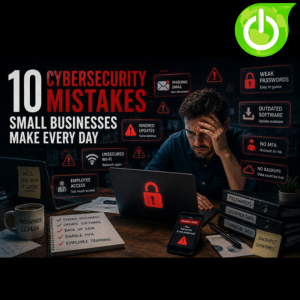
 As a small business owner, it’s easy to think, “Why would a hacker care about me? I’m not a Fortune 500 company.” But that is exactly what hackers are counting on. They look for easy targets and small businesses often leave the digital front door unlocked.
Here are 10 everyday mistakes that put your business at risk:
- Skipping Employee Training: Your team is your biggest vulnerability. If they don’t know how to spot a fake email, they will click a bad link.
- Terrible Passwords: Using “Password123” or reusing the same password across multiple accounts is an open invitation to hackers.
- Ignoring Two-Factor Authentication (MFA): If you aren’t using those text or app codes to log in, you’re missing the easiest security protection available.
- Clicking “Remind Me Later” on Updates: Postponing software updates leaves known security holes wide open.
- Not Backing Up Data: If your files were locked up today by ransomware, could you run your business tomorrow? You need automatic, off-site backups.
- Giving Everyone Access to Everything: A receptionist doesn’t need access to HR files or full financial data. Limit permissions to just what people need to do their jobs.
- No “Bring Your Own Device” (BYOD) Rules: If employees use personal phones for work, a lost phone or a kid downloading a sketchy app can compromise your business data.
- Forgetting Physical Security: Leaving a work laptop in an unlocked car or a tablet sitting on a coffee shop counter is an easy win for thieves.
- No Game Plan for a Breach: If you get hacked, scrambling in a panic costs time and money. You need a simple checklist of who to call and what to do before it happens.
- Trusting Outsiders Blindly: You might be secure, but what about the software company you use for payroll or your IT guy? If they get hacked, you get hacked.
The Bottom Line: Cybersecurity isn’t just a tech issue; it’s a business survival issue. Fixing these 10 things doesn’t require a massive budget, just some common sense and a little discipline.