
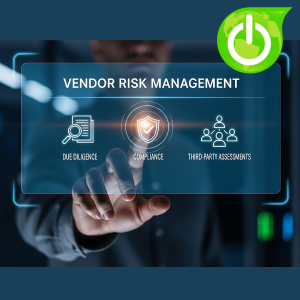
 You’ve invested in a robust firewall. Your employees are trained to recognize phishing emails. On paper, your organization looks secure. But what about your accounting firm’s cybersecurity? Your cloud hosting provider? The SaaS tool your marketing team relies on every day?
Every vendor you work with represents a digital doorway into your business. If one of them leaves that door unlocked, your organization is vulnerable, too. This is the supply chain cybersecurity trap, and it’s one of the most overlooked risks facing businesses today.
Cybercriminals know it’s often easier to breach a smaller vendor with weaker defenses than to attack a well-protected organization directly. Once inside, they can use that vendor’s trusted access as a springboard into larger networks. High-profile incidents like the SolarWinds breach demonstrated how devastating supply chain attacks can be, creating ripple effects across thousands of organizations.
When an attack enters through a trusted partner, even strong internal defenses may not be enough. Trust without verification becomes a liability.
Third-Party Cyber Risk: A Critical Blind Spot
Third-party cyber risk remains a major gap in many security programs. Vendors are typically evaluated based on cost, convenience, and performance but security often receives far less scrutiny. Questions you should consider:
- Have you assessed how your vendors train their employees?
- Do they have a documented incident response plan?
- How quickly would they notify you if a breach occurred?
- Assuming vendors are secure without evidence is a dangerous gamble.
The Ripple Effect of a Vendor Breach
When a vendor is compromised, your data is often the primary target. Attackers may gain access to customer records, financial information, or intellectual property stored with or accessible through that vendor. In some cases, they use the vendor’s systems to launch additional attacks, making malicious activity appear legitimate.
The consequences can be severe. Beyond data loss, organizations may face regulatory penalties, reputational damage, and costly recovery efforts. The U.S. Government Accountability Office (GAO) has repeatedly emphasized the importance of assessing software supply chain risks, a lesson that applies just as strongly to private-sector businesses.
Operational disruption is another major cost. IT teams are often pulled away from strategic initiatives to investigate and contain incidents they didn’t cause. Forensic analysis, credential resets, access reviews, and client communications can stretch on for weeks.
The real cost isn’t just fines or fraud, it’s the prolonged disruption and strain on your people while managing someone else’s security failure.
Conduct a Meaningful Vendor Security Assessment
A vendor security assessment is essential due diligence. It shifts the relationship from “trust me” to “show me.” This process should begin before signing a contract and continue throughout the partnership.
Key questions to ask include:
- What security certifications do you maintain (such as SOC 2 or ISO 27001)?
- How is our data stored, handled, and encrypted?
- What is your breach detection and notification process?
- Do you conduct regular penetration testing?
- How do you manage employee access to sensitive systems?
Clear, documented answers reveal far more about a vendor’s security posture than any sales pitch.
Build Cybersecurity Supply Chain Resilience
Resilience means assuming incidents will happen and planning accordingly. Vendor risk management should be continuous, not a one-time checklist. Ongoing monitoring can alert you if a vendor appears in a new data breach or if their security posture deteriorates.
Contracts also play a critical role. Vendor agreements should include defined cybersecurity requirements, right-to-audit clauses, and firm breach notification timelines—often within 24 to 72 hours. These safeguards turn expectations into enforceable obligations.
Practical Steps to Secure Your Vendor Ecosystem
To reduce supply chain risk, take these practical steps:
- Inventory vendors and assign risk. Identify all vendors with access to your data or systems and categorize them by risk level. High-risk vendors require deeper scrutiny and stronger controls.
- Initiate security conversations early. Distribute security questionnaires and review vendor cybersecurity policies upfront. This process often uncovers gaps—and encourages vendors to improve.
- Reduce single points of failure. For critical services, consider backup vendors or spreading responsibilities across multiple providers to limit exposure.
From Weakest Link to Fortified Network
Vendor risk management isn’t about distrust—it’s about shared responsibility. Raising your standards encourages partners to strengthen theirs, creating a more secure ecosystem for everyone.
Proactive vendor risk management transforms your supply chain from a hidden vulnerability into a strategic advantage. It also demonstrates to clients and regulators that you take cybersecurity seriously at every level.
In today’s interconnected world, your security perimeter extends far beyond your office walls.
Contact us today to assess your highest-risk vendors and build a vendor risk management program that protects your business.